A quick reference for every number, letter, and LCD message your Brother printer can throw at you, plus what actually causes it.
Why Your Brother Printer Is Showing an Error
Brother printers are built to flag problems before they turn into ruined pages or damaged hardware, which is why an error code or LCD message shows up the moment something's off. Most of the time it's one of a handful of usual suspects: an outdated or corrupted printer driver, a cartridge that isn't seated correctly, a loose USB or network cable, a paper jam the sensors haven't cleared, or a Wi-Fi signal too weak for the printer to hold a connection.
The code itself is actually good news. Brother printers don't just say "something's wrong," they tell you which system triggered the alert, so you can go straight to the fix instead of guessing.
How to Find Your Error Code
Depending on your model and how you're printing, the error will show up in one of three places:
- The LCD screen on the printer itself. This is where you'll see numeric codes (like 46 or 48), letter-number combinations (like A5 or E2), or plain-text messages (like "Cover is Open" or "Replace Toner").
- A Status Monitor pop-up on your computer. Brother's status monitor software mirrors the printer's LCD message on your Windows or Mac screen, which is handy if the printer is in another room.
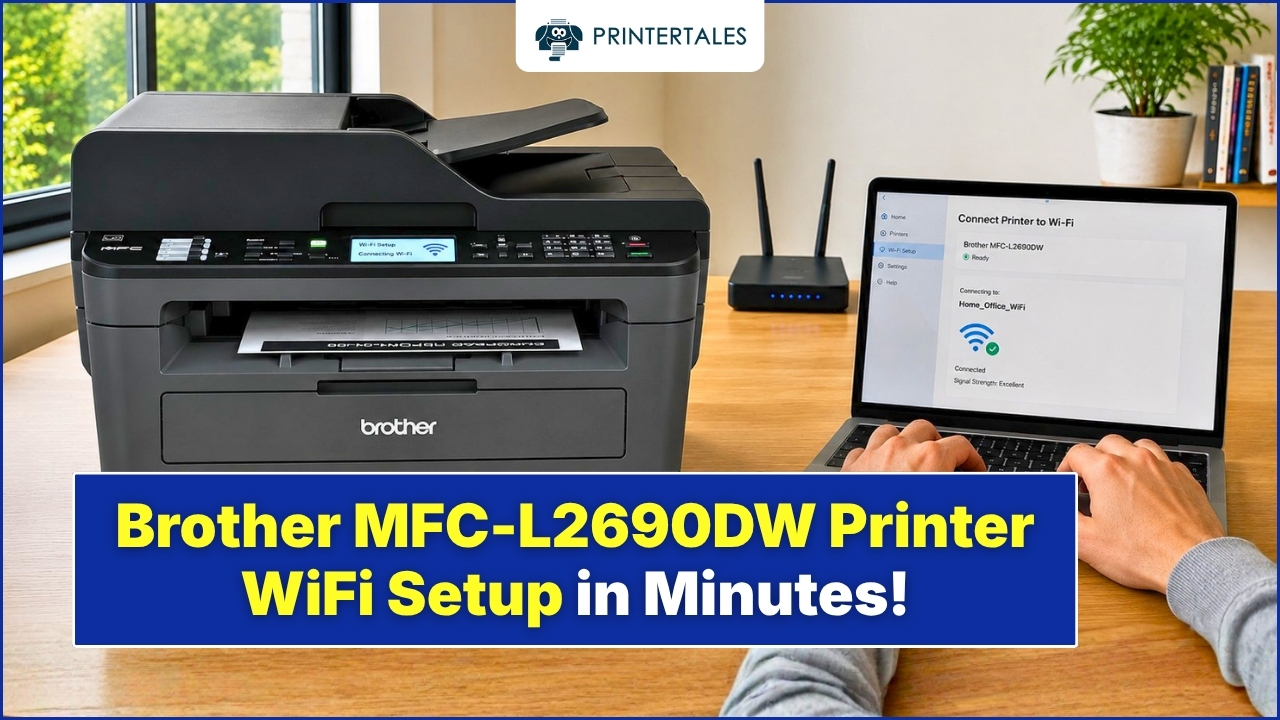
- A printed WLAN report. If you're setting up wireless printing and the connection fails, the printer can print a network report showing a "TS" code (TS-01 through TS-06) that points to exactly where the wireless handshake broke down.
Whichever one you're looking at, write the exact code down before you start troubleshooting. It's the difference between a two-minute fix and an hour of guessing.
Brother Printer Error Codes and What They Mean
Paper jam codes
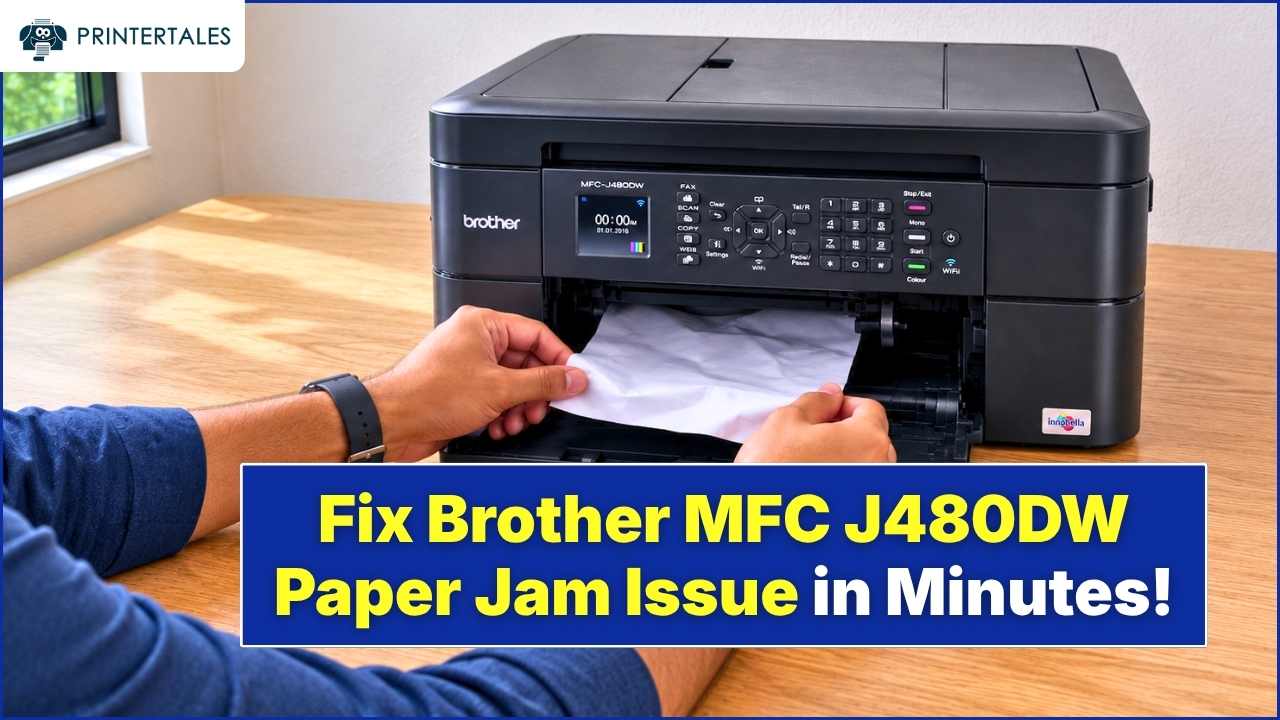
Codes in the 30 to 3F range (and, on some multifunction models, 50 to 7D) mean the printer's sensors have detected paper stuck somewhere in the path, whether that's the main tray, the duplexer, or the fuser area. Open every cover the printer indicates, remove jammed sheets by pulling in the direction of the paper path (never backward), and check that no torn corners were left behind.
Temperature codes
- 40, 42, 43, 44: the fuser's internal temperature is too high. Unplug the printer and let it cool for 10 to 15 minutes before restarting it.
- 49: the opposite problem, the printer is too cold to fuse toner properly. Move it to a warmer room and let it acclimate before printing again.
Ink, toner, and drum messages
- No Cartridge: one or more ink cartridges aren't fully seated, or one wasn't reinstalled after cleaning.
- Cover is Open: the top cover, scanner cover, or ADF cover isn't latched all the way, even if it looks closed.
- Ink Absorber Full / Error 46: the internal waste ink pad that catches purge and cleaning overflow has reached capacity. This one isn't user-replaceable on most models and typically needs a technician or a factory reset of the ink absorber counter.
- Toner Low / Replace Toner: the toner cartridge is near or past its page yield (Brother's low-toner warning usually triggers around 10% remaining).
- Replace Drum / Drum !: this is a separate part from the toner cartridge. Laser models track the drum unit on its own page count, so this message appears even with a full toner cartridge.
Print head and mechanical errors
- 48 or 4F: a print head fault, often a broken or dislodged print head cable.
- Unable to Print XX / Unable to Init XX (inkjet models): a two-digit code following this message points to a mechanical jam, most often a foreign object (a paper clip, a torn scrap, packing tape) caught in the carriage path or blocking the encoder strip.
Scanner and main board errors
- A5, A6, A7, A8, AF: a scanner unit fault.
- E0: a fax modem fault (fax-enabled models only).
- E2, E3: a main circuit board fault.
These three are the codes most likely to need an authorized repair rather than a DIY fix, since they point to internal hardware rather than something replaceable at home.
Wireless setup errors (TS codes)
Printed on a WLAN report when wireless setup fails:
- TS-01: the printer's wireless radio is switched off.
- TS-02: the printer can't detect your router or access point.
- TS-03: the network name or security settings entered don't match what the router expects.
- TS-04: the printer found the network but couldn't join because the security type doesn't match.
- TS-05: the SSID or network key entered is incorrect.
- TS-06: the authentication or encryption method doesn't match the router's settings.
For a full walkthrough on clearing these, see our dedicated guide on [Brother printer not connecting to WiFi].
General Fixes That Clear Most Error Codes
Before jumping to a specific code, these steps resolve a surprising share of Brother error messages on their own:
- Power cycle the printer. Turn it off, unplug it for 60 seconds, then plug it back in. This clears temporary sensor faults and resets the internal memory that some errors (like paper jam codes) get stuck reading.
- Update or reinstall the driver. On Windows 11, go to Settings > Bluetooth & devices > Printers & scanners, select your Brother printer, and choose Update driver. If that doesn't find anything newer, download the current driver directly from Brother's support site for your exact model.
- Run the built-in printer troubleshooter. On Windows 11: Settings > System > Troubleshoot > Other troubleshooters > Printer > Run. On Windows 10: Settings > Update & Security > Troubleshoot > Additional troubleshooters > Printer.
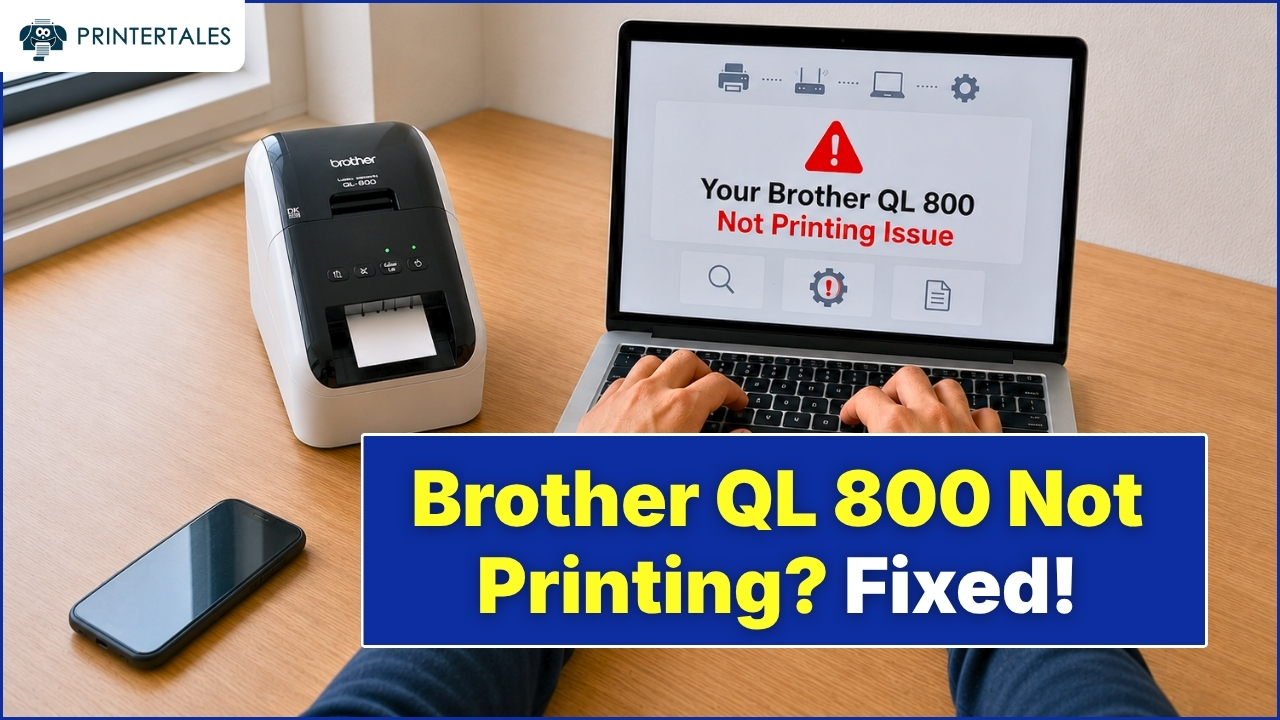
- Clear the print queue. A stuck job can trigger errors that have nothing to do with the actual printer hardware. See our guide on a [Brother printer job stuck in queue] if a cancelled job won't clear.
- Reseat cartridges and check every cover. Half of the "Cover is Open" and "No Cartridge" messages trace back to a cartridge or cover that looks closed but isn't fully latched.
When It's Time to Need Additional Assistance
Most Brother error codes, paper jams, driver conflicts, and wireless setup errors are fixable in a few minutes without opening the case. A smaller set, mainly the ink absorber (46), print head (48/4F), and main board (E2/E3) errors, point to a worn or failed internal part. If you've power-cycled the printer and the same code comes right back, that's usually the signal to stop troubleshooting and get it looked at rather than risk further damage.