Ricoh multifunction printers are built for busy offices, but getting a new one talking to your computer or network doesn't always go smoothly. You unbox it, plug it in, run the installer, and then... nothing. The setup hangs, an error code pops up, or the printer just never shows up in your printer list.
That's a Ricoh printer setup issue, and it's one of the most common complaints we see. The good news: it's almost always caused by one of a handful of things, and most of them you can fix yourself in a few minutes.
What Causes Ricoh Printer Setup Problems
Most Ricoh setup issues trace back to one of four things:
- A shaky connection. The USB cable is loose, or the printer and computer aren't on the same Wi-Fi network.
- The wrong driver, or no driver at all. This has gotten more common recently: as of January 15, 2026, Microsoft stopped pushing new third-party printer drivers through Windows Update on Windows 11. That means Windows can no longer always find and install a Ricoh driver automatically the way it used to, so you may need to grab it directly from Ricoh instead.
- A changed network. If your router was reset, renamed, or swapped out since the printer was last connected, the printer is still trying to reach a network that no longer exists.
- Security software getting in the way. Antivirus tools sometimes block the installer mid-process, which can leave the setup half-finished.
Once you know which of these applies, the fix is usually quick.
How to Fix a Ricoh Printer Setup Issue
Solution 1: Check the physical connection first
Before touching any settings, rule out the simple stuff:
- Plug the printer directly into a wall outlet, not a power strip or surge protector.
- Make sure the power cable and USB or network cable are both fully seated and undamaged.
- Give the printer a minute after powering on. Ricoh MFPs take a bit to finish their startup sequence before they'll respond to a computer.
Solution 2: Restart both devices
It sounds basic, but a cold restart clears out more setup errors than almost anything else. Power off the printer and your computer, wait about 30 seconds, then turn the printer on first and let it fully boot before starting the computer. This resets any stuck network handshake between the two.
Solution 3: Install the driver directly from Ricoh, not Windows Update
With Windows Update no longer distributing new third-party drivers, the most reliable route is Ricoh's own driver page:
- Go to Ricoh's official support site and search your exact model number.
- Download the driver package for your version of Windows or macOS.
- Right-click the installer and choose "Run as administrator." You'll need an account with Manage Printers permissions for the install to complete.
- If a Windows Security prompt appears asking whether to trust the software, choose to install it anyway. This is expected for manufacturer drivers.
Solution 4: Add the printer manually if it doesn't show up on the network
If the installer searches for your Ricoh printer and comes up empty, don't restart the whole process. Instead:
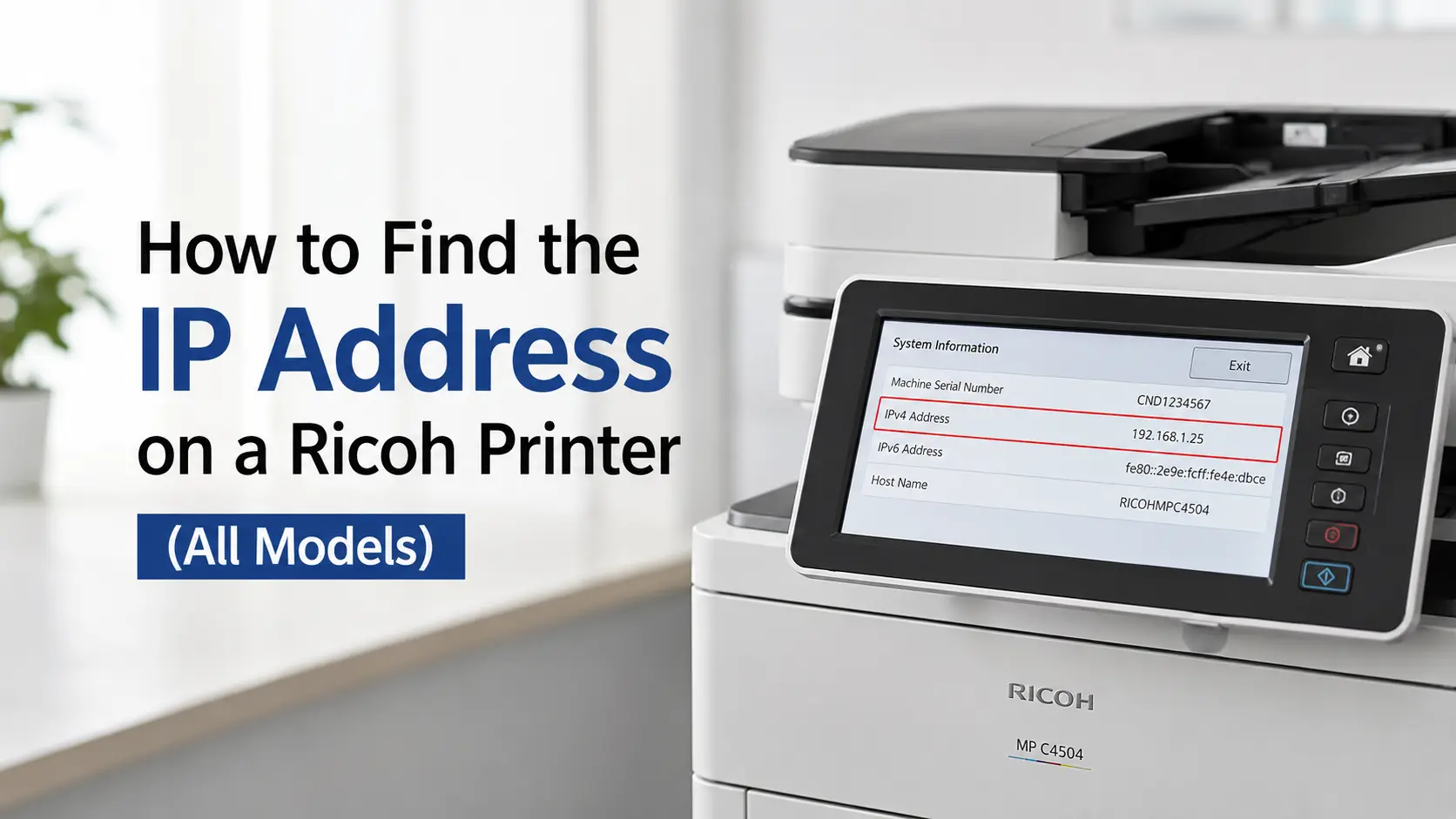
- On the printer's control panel, check the network status screen to find its current IP address.
- In the driver installer, look for an option like "Specify device IP address" or "Cannot find the device" and enter that IP address directly.
- If the printer recently changed networks, use the control panel to restore or re-enter the network settings so it reconnects to the correct router.
Solution 5: Reset the print spooler and run the built-in troubleshooter
If the driver installed but the printer still won't respond, the issue is often stuck in Windows itself:
- Open the Services app, find "Print Spooler," and restart it. This clears out jammed setup or print jobs.
- Temporarily disable antivirus software, then re-run the installer, since security tools are a frequent cause of installs stalling partway through.
- Run Windows' printer troubleshooter from Settings to catch anything the manual steps missed.