A code on your Kyocera's display isn't random. It's a diagnostic report the machine is handing you, and once you know how to read it, most fixes take minutes.
Kyocera's business printers and copiers, from the ECOSYS line to the larger TASKalfa units, are built to tell you exactly what's wrong instead of just stopping. The problem is that they say it in a language of letters and numbers: C6000, J1101, 1102, and dozens more. Look it up on the wrong forum and you'll find advice written for an entirely different printer, or a "repair tool" download that has nothing to do with Kyocera hardware.
This page breaks down what the code prefixes actually mean, walks through the errors we're asked about most, and tells you honestly which ones you can clear yourself and which ones mean it's time to stop pressing buttons and call a technician.
Understanding the Code System
Every Kyocera code starts with a letter, and that letter tells you what kind of problem you're dealing with before you even look at the number.
- C (Call Service): A hardware or board-level fault the printer's controller has detected on its own, covering everything from feed motors to the fuser to the imaging drum. Some clear with a power cycle; others need a part replaced.
- J (Jam): A paper jam, paired with a location indicator that points to the cassette, MP tray, a cover, or the output area. These are meant to be cleared by the user and almost always are.
- F: A firmware or controller-level fault, usually tied to the print engine's internal processing rather than a physical part.
- E: A fax communication error, covering failed connections, line issues, or problems with an incoming or outgoing document.
- CF: A deeper system or firmware error, often related to the panel, checksum, or internal storage.
- U: Not a fault at all. This is the printer's maintenance and service mode, used deliberately by technicians rather than triggered by a breakdown.
Knowing the prefix narrows down the fix before you've even searched for the specific number.
Common Kyocera Error Codes and Messages
C6000: Call Service, Fuser Error
Common causes:
- A broken or loose fuser heater wire or thermistor connection
- A worn-out or incorrectly seated fixing heater
- An unstable power source feeding the unit
What you can try:
- Power the printer off from the main switch, wait a full 60 seconds, and power it back on. A surprising number of C6000 errors are a one-time temperature-sensing glitch that clears with a clean restart.
- If it returns immediately, stop. This code sits behind a heating element running at high temperature, and clearing it by forcing a reset without addressing the real fault risks burning out the fuser or, in rare cases, creating a fire hazard.
- Book a technician to inspect the thermistor and heater wiring. If the fault turns out to be a blown thermal fuse, that part gets replaced, not reset.
We're intentionally not publishing a maintenance-mode key sequence here: the exact steps differ across Kyocera's KM, FS, ECOSYS, and TASKalfa generations, and running the wrong one on the wrong model can mask a real fuser fault instead of fixing it.
1102: Send Error (Scan to Email / SMB)
What it means: This isn't a hardware problem at all. 1102 is Kyocera's send-error code for a failed SMTP login when the machine tries to email a scan, meaning the login user name or domain wasn't entered correctly, or the mail server rejected the credentials.
Common causes:
- The user name is missing the domain (should be entered as domain\username on many networks)
- The password saved in the printer's address book is outdated
- Microsoft 365 or Exchange Online has Basic authentication disabled, which blocks the printer's login attempt outright
What you can try:
- Re-check the SMTP user name, domain, and password in Command Center RX (the printer's built-in web settings page) under Advanced Setup > SMTP.
- If your mail is hosted on Microsoft 365, Basic auth for SMTP is the usual culprit. Kyocera's Exchange Online Connector (EOC) utility exists specifically to let supported models authenticate through modern OAuth instead. Confirm your model is supported before relying on it.
- As a fallback, route the printer through an SMTP relay that still accepts a standard user name and password.
Waste Toner Box Full / Replace Waste Toner Box
What it means: Exactly what it says, and it's easy to misread. The waste toner box is a separate container from your toner cartridge. It collects the excess toner scraped off the drum and transfer belt during normal printing, and once it fills up, the printer stops rather than let it overflow inside the machine.
Why replacing the toner cartridge won't help: The two systems are tracked independently by the printer's counters. A full toner cartridge and a full waste box are unrelated states, so swapping in new toner does nothing for this message.
What you can try:
- Open the front cover and locate the waste toner box (labeled with a "WT-" part number on most models).
- Remove it carefully and hold it upright, since it's holding loose toner powder.
- Install a new one and confirm it clicks fully into place. Most Kyocera units won't resume printing until the sensor detects it's properly seated.
Paper Jam (J-Codes)
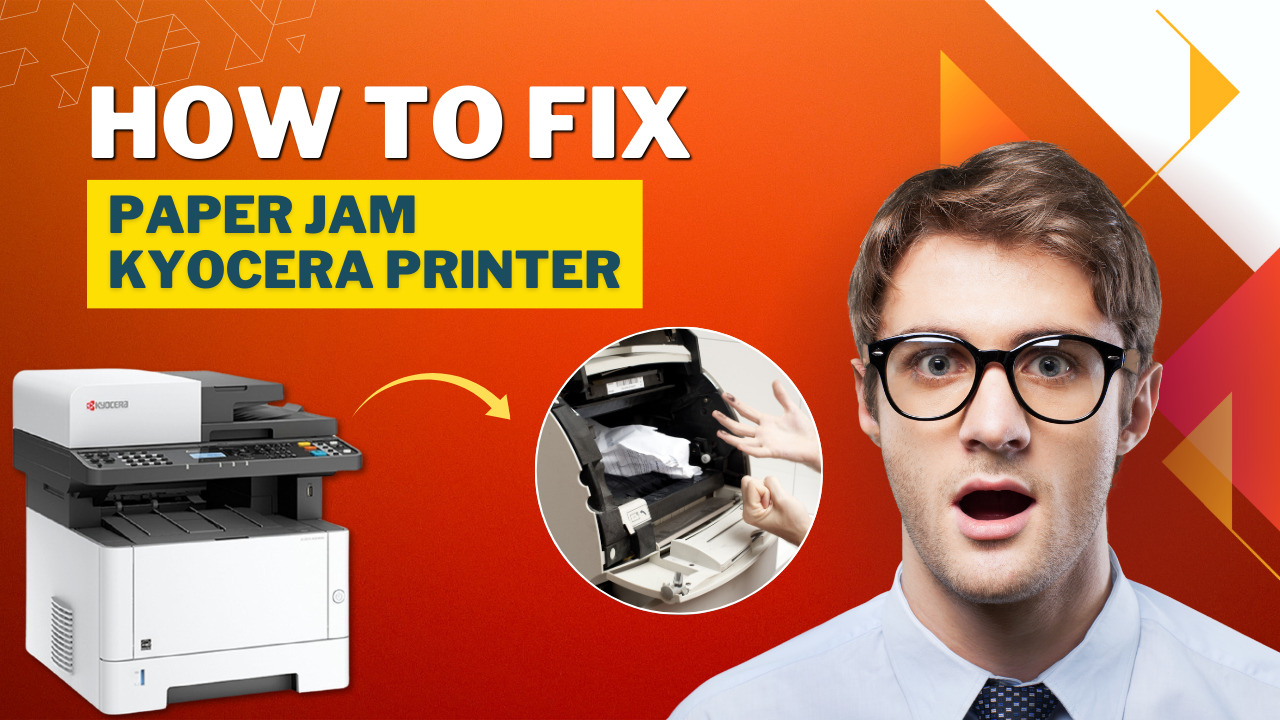
What it means: A J-code pairs the jam alert with a specific location, shown either as a number or as a highlighted diagram on the touch panel, pointing to the cassette, the MP tray, a duplex unit, or the output path.
What you can try:
- Follow the on-screen diagram exactly. Kyocera panels show the specific cover to open and the direction to pull the paper, and pulling in the wrong direction is the most common way a small jam turns into a torn-paper jam.
- Check the paper itself. Curled, damp, or out-of-spec stock is behind a large share of repeat jams, not a mechanical fault.
- If the same location jams repeatedly after the paper is confirmed good, the feed rollers in that area are likely worn and due for replacement.
Safe Troubleshooting Process
Not every code on this page carries the same risk if you get it wrong. As a general rule:
- Jam and send/scan codes (J-, and most numeric send codes): Safe to work through yourself. Worst case, you don't fix it and the code stays.
- Call-service codes (C-): Safe to try a single power cycle. If the code returns, stop there. These point to a genuine hardware fault, and repeated forced resets can turn a fixable part into a replaced one.
- Fixing/fuser codes specifically: Never open or handle the fuser assembly yourself. It runs at high temperature and carries mains voltage internally, and it should only be serviced by someone trained on it.
If a code keeps returning after one clean restart, that's the signal to bring in a technician rather than keep cycling the power.