You go to print something and your Epson printer either doesn't show up at all, or it connects for a minute and then drops again. It's one of the most common issues we hear about with Epson all-in-ones, and it almost never means the printer is broken. In most cases, the printer, your router, or your computer's saved connection settings have simply lost track of each other. Work through the fixes below in order. They're arranged to solve the problem fastest for most people first.
Try This First (Quick Checklist)
Before digging into settings menus, run through these:
- Restart both devices. Turn off the printer, unplug the router for 30 seconds, then power both back on. This clears more temporary glitches than any other single step.
- Confirm you're on the same network. Your printer and your computer or phone need to be on the same Wi-Fi network, not a guest network or a similarly named neighboring one.
- Check the distance. Move the printer closer to the router, at least temporarily, to rule out a weak signal.
- Check the Wi-Fi light. A solid light usually means connected; a blinking or amber light means it's still searching or has lost the connection.
- Recheck your Wi-Fi password. One mistyped character is one of the most common reasons setup fails.
If none of that clears it, the causes and fixes below go deeper.
Common Causes
A few things tend to cause this, and knowing which one applies to you saves time:
- A router change. A new router, a changed Wi-Fi password, or a router firmware update can disconnect a printer that was working fine the day before.
- A 5GHz-only network. Most home inkjet and all-in-one printers, Epson's included, can only join a 2.4GHz Wi-Fi network. If your router broadcasts one combined name for both bands, the printer can get steered onto the 5GHz side it can't see.
- Outdated printer firmware. Older firmware sometimes doesn't play well with newer router security standards.
- Stale saved network settings. If you've reset your router or moved, the printer may still be trying to reconnect to a network that no longer exists.
- A router security mismatch. Some older Epson models don't fully support WPA3-only networks.
- A stuck print queue connection. Sometimes the printer itself is fine, but your computer is still talking to a stale, saved connection.
Fix 1: Reconnect Using the Printer's Control Panel
For any Epson model with a touchscreen or LCD panel, this resets the wireless connection from scratch:
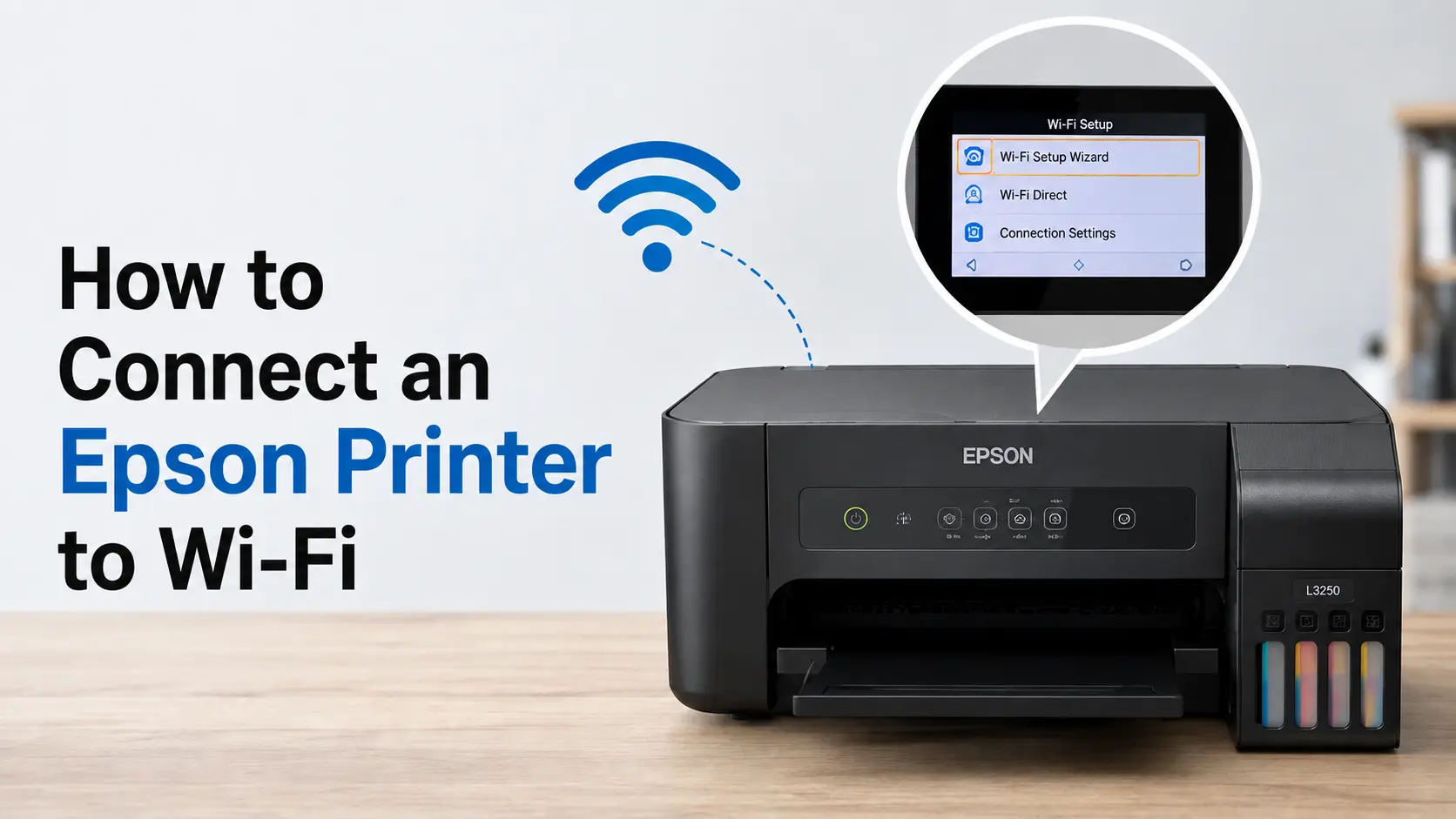
- On the printer's home screen, select the Wi-Fi or network icon, then choose Wi-Fi Setup Wizard.
- Select your network name (SSID) from the list, or choose Enter Manually if it isn't listed.
- Enter your Wi-Fi password. It's case-sensitive, so double-check capital letters and numbers.
- Confirm the settings and wait for the printer to connect. A solid blue Wi-Fi icon means success.
- Print a network status sheet (usually under Settings > Network Settings) to confirm it picked up an IP address.
If your router has a WPS button, you can skip typing the password: select Push Button Setup (WPS) on the printer, then press the WPS button on the router. Most routers confirm the pairing with a flashing light within a couple of minutes.
Fix 2: Set Up Wi-Fi with the Epson Smart Panel App
Newer Epson printers are built to be set up from a phone rather than the printer's own panel, and it's often the fastest option:
- Install Epson Smart Panel from the App Store or Google Play.
- Open the app. If it finds your printer automatically, follow the prompts to finish setup.
- If not, tap the + icon, then select your Wi-Fi network and enter the password.
- Keep your phone near the printer until the app confirms setup is complete; don't back out early.
- Print a test page from the app once it's connected.
Older Epson models that use the Epson iPrint app instead follow the same basic steps: open the app, add the printer, select your network.
Fix 3: Fix a Wi-Fi Printer Showing "Offline" on Windows
If the printer is connected to Wi-Fi but Windows won't send it a job, the issue is usually on the computer's side:
- Open Settings > Bluetooth & devices > Printers & scanners.
- Click your Epson printer and make sure Use Printer Offline is turned off.
- Open the printer's Properties, go to the Ports tab, and confirm it's using the correct network port, not a leftover USB or WSD port from an earlier setup.
- If it still won't respond, remove the printer from the list and add it again so Windows detects it fresh.
- Temporarily disable third-party antivirus or firewall software to rule out blocked traffic, then add a permanent exception if that fixes it.
For more on this specific error, see our Epson Printer Offline guide.
Fix 4: Fix a Wi-Fi Connection Issue on Mac
- Go to System Settings > Printers & Scanners and remove the Epson printer if it shows an exclamation mark or "offline."
- Click +, wait for the printer to appear under Bonjour/AirPrint discovery, then select it and add it. Don't have a USB cable connected at the same time; it can interfere with discovery.
- If it doesn't appear, confirm the Mac and printer are on the same Wi-Fi network. Guest networks and separated device networks are common culprits.
- Still nothing? Find the printer's IP address from its own network status page, then add the printer manually in Printers & Scanners using that address instead of relying on automatic discovery.
- If macOS keeps "forgetting" the printer after restarts, right-click it in the list, choose Reset Printing System, then add it again.
Fix 5: Still Not Connecting? Advanced Fixes
- Reset the printer's network settings. From the control panel: Settings > Restore Default Settings > Reset Network Settings. This clears corrupted Wi-Fi settings, but you'll need to reconnect and reinstall the printer on each computer afterward.
- Update the firmware and driver. Search your exact model on Epson's support site and install the latest firmware and printer driver. This resolves many router-compatibility issues tied to newer security standards.
- Split your router's Wi-Fi bands. If your router combines 2.4GHz and 5GHz under one name, create a separate name for 2.4GHz and connect the printer to that one directly.
- Check your router's security mode. If it's set to WPA3-only, switch to WPA2/WPA3-mixed so older printers can still authenticate.