Canon Printer Not Printing: How to Diagnose the Cause
You click Print, the document looks fine on screen, and the printer just sits there. Or it pulls a sheet through and hands it back blank. It's frustrating, but it rarely means the printer is dead.
When a Canon printer is not printing, the cause is usually one of a handful of things: a job stuck in the queue, a computer that thinks the printer is offline, a cartridge that's empty or clogged, or a driver that changed after an update. This guide checks them in the order a technician would. It starts with the five-minute checks, then covers Windows, Mac, and the quirks of PIXMA, MAXIFY, imageCLASS, and SELPHY models.
Start Here: Quick Checks That Solve Most Cases
Before you touch drivers or settings, go through this list. Plenty of "my Canon won't print" problems end right here.
Restart it the right way. Turn the printer off, unplug it, wait 30 seconds, then plug it back in and turn it on. The power button alone doesn't always clear a stuck state.
Look at the screen or the lights. A message, a support code, or a blinking orange Alarm lamp tells you exactly what the printer is unhappy about. Sort that out first. The support code table further down covers the common ones.
Check the paper path. Is there paper in the tray the job is actually using (rear tray or front cassette)? Are the guides snug against the stack? Is the output tray open, and is every cover fully shut?
Print without the computer. From the printer's own menu or buttons, print a nozzle check pattern (inkjet) or a configuration or status page (laser).
If it prints cleanly, the printer is fine. The problem is somewhere between your device and the printer, so go to the Windows or Mac section.
If it comes out blank, faded, or missing colors, the problem is ink, toner, or the print head. Go to the model-specific section.
Make sure the job went to the right place. It's easy to send a document to "Microsoft Print to PDF," a leftover duplicate with a name like "Canon TS3500 series (Copy 1)," or a printer in another room.
Check ink or toner from the printer itself. Go by the level on the printer's screen or in Canon's software, not by a guess about when you last changed the cartridge.
Why Your Canon Printer Isn't Printing
Almost every case falls into one of four groups. Working out which group you're in beats clicking through random fixes.
The job never reaches the printer
A failed or corrupted job is stuck at the top of the print queue, and everything behind it is waiting.
The queue is paused, or Windows or macOS has the printer marked offline.
The printer got a new IP address after a router restart or power outage, and your computer is still sending jobs to the old one.
The computer and the printer are on different networks, such as your main Wi-Fi and a guest network.
The printer is in its wireless direct (access point) mode, so it isn't on your regular network at all.
The driver or operating system changed
A Windows or macOS update replaced the driver, reset the port, or created a second copy of the printer.
Windows set the printer up with its built-in Microsoft IPP Class Driver instead of Canon's driver. Since July 1, 2026, Windows 11 prefers that built-in driver when it installs a printer, so you'll now see it on a lot of fresh setups. Plenty of Canon printers print fine with it, but you can lose Canon's extra settings and maintenance tools, and it's one more thing to rule out when jobs fail.
Windows protected print mode is turned on. It limits Windows to its newer print system and removes printers that aren't compatible with it.
Ink, toner, or the print head
A cartridge or tank is empty, reads as empty, or isn't clicked fully into place.
Protective tape or a cap is still on a new cartridge.
The print head nozzles have dried out or clogged. This is the classic cause of blank or streaky pages on an inkjet that has sat unused for a while.
On a MegaTank model, a tank ran too low and ink stopped reaching the print head.
On a laser model, the toner sealing tape wasn't pulled all the way out, or the drum is worn.
A paper, hardware, or account block
Paper is jammed or missing, or a cover is open.
The printer is showing a support code it can't clear on its own.
On office imageCLASS models, Department ID Management, Secure Print, or a page limit set by whoever manages the printer is holding or rejecting the job.
Canon support codes that stop printing [NEW]
If your printer shows a four-character support code, this table tells you what you're dealing with. Meanings can vary a little between models, so check your model's manual too, or see our full list of Canon printer error codes.
Code
What it usually means
What to do
1000
No paper in the tray the printer is feeding from
Load paper, slide the guides against the stack, and press OK
1300
Paper jammed while feeding from the rear tray
Pull the sheet out slowly with both hands so it doesn't tear
1403
The cartridge or print head isn't recognized, or the head may be damaged (depends on the model)
Reseat the cartridge and restart. If the code comes back, replace the cartridge on FINE cartridge models, or arrange a repair on models with a separate print head
1485
The cartridge isn't made for this printer
Install the correct cartridge for your model
1686 / 1688
Ink may have run out (1686), or has run out (1688)
Replace the cartridge or refill the tank
1700
The ink absorber is almost full
Press OK to keep printing for now, and plan a service visit
4103
The job can't print with the current settings
Cancel it, then match the paper size and type in your print settings to the paper that's loaded
5100
The print head holder can't move
Remove any jammed paper or leftover shipping tape, and make sure every ink tank is clicked in
5B00
A printer error that needs service. On many PIXMA models, it means the ink absorber is full
Contact a Canon service center
6000
A printer error, often caused by something blocking the mechanism
Clear any jammed paper, unplug the printer, plug it back in, and restart
B200
A hardware error that needs repair
Turn the printer off, unplug it, and contact Canon service
About code 1688: Canon lets you keep printing by holding the Stop button for at least 5 seconds, which switches off ink level detection for that cartridge. Canon also warns that printing with no ink can damage the printer, and says it isn't liable for problems that result. Only do this when you know there's ink in the cartridge, such as after a refill.
How to Fix a Canon Printer Not Printing on Windows 11 and Windows 10
Work through these steps in order and send a test page after each one. As soon as something works, you can stop.
1. Check the connection
USB: Plug the cable straight into the computer, not into a hub, dock, or monitor port. Try a different cable if you have one.
Wi-Fi: Confirm the printer's screen shows it's connected, and that your PC is on the same network. If the printer is in wireless direct or access point mode, turn that off so it prints over your regular network.
2. Clear the print queue
Go to Settings > Bluetooth & devices > Printers & scanners, select your Canon, and click Open print queue. Click the ... menu and choose Cancel all. If a job stays stuck on "Deleting," step 5 will clear it. Our guide to a Canon print job stuck in the queue has more help.
3. Resume a paused or offline printer
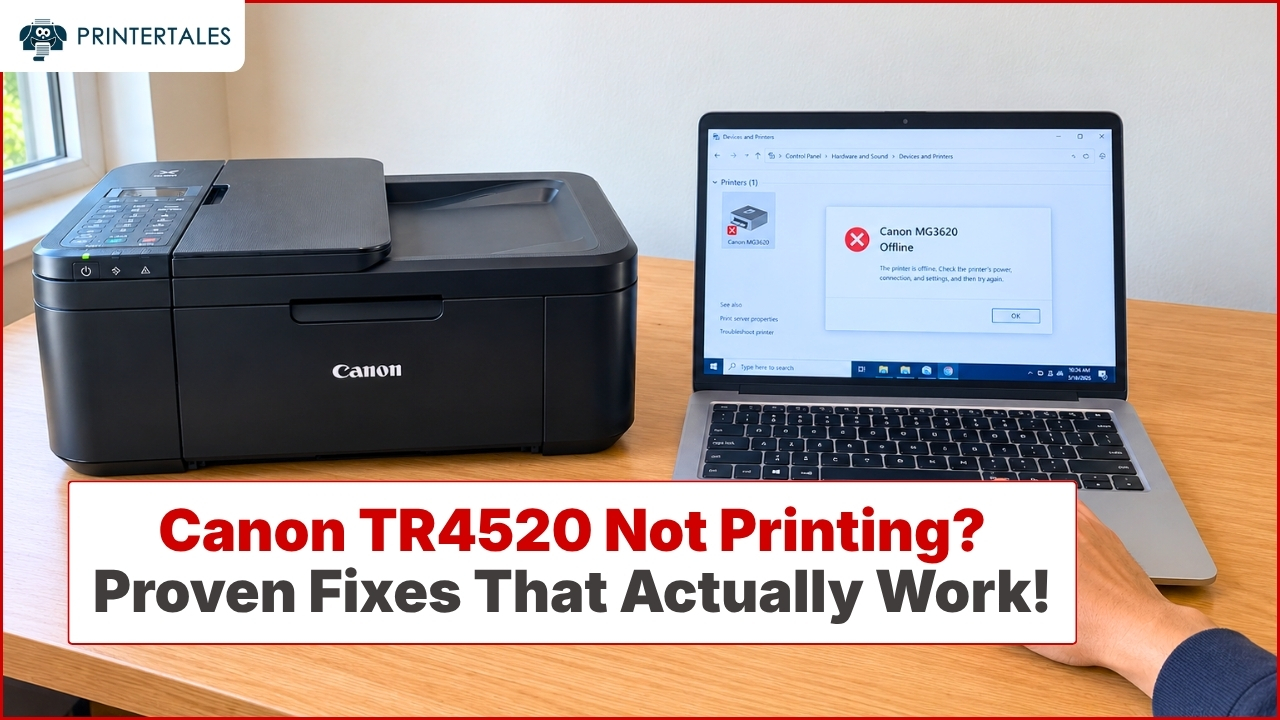
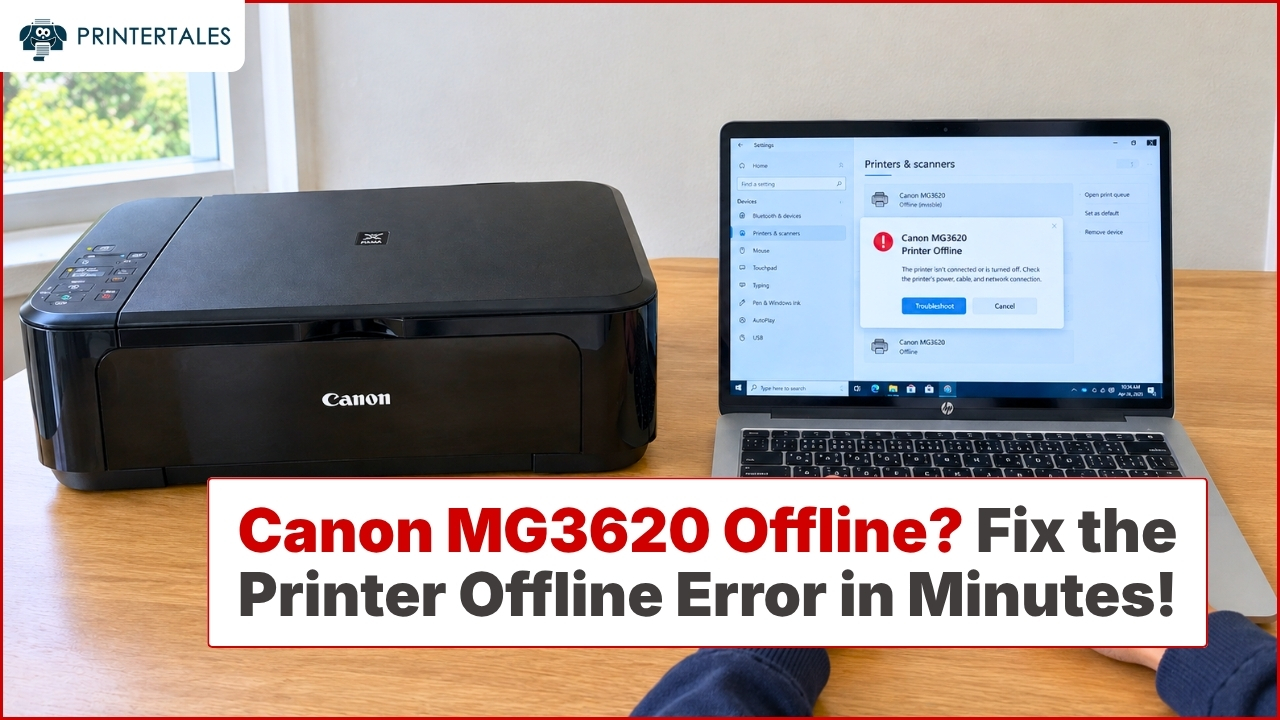
If the queue shows the printer as paused, resume it. On Windows 10, open the Printer menu in the queue window and clear both Pause Printing and Use Printer Offline. If Windows still lists the printer as offline, our Canon printer offline guide covers that problem in detail.
4. Set your Canon as the default printer
In Printers & scanners, scroll down to Printer preferences and turn off Let Windows manage my default printer. Then open your Canon and click Set as default. While that setting is on, Windows keeps switching the default to whichever printer you used most recently at your current location.
5. Restart the Print Spooler and clear its files
Search for Services from the taskbar and open it.
Double-click Print Spooler and click Stop.
In the File Explorer address bar, enter %WINDIR%\system32\spool\printers and delete everything inside that folder. Leave the folder itself alone.
Go back to Services, open Print Spooler, click Start, and set Startup type to Automatic.
6. Run the printer troubleshooter
On Windows 11, go to Settings > System > Troubleshoot > Other troubleshooters and run Printer. It opens in the Get Help app and checks the spooler, driver, and connection for you.
7. Check which driver Windows is using [NEW]
Open your Canon in Printers & scanners, select Printer properties, and look at the Advanced tab. If the driver is listed as Microsoft IPP Class Driver, Windows is using its own generic driver instead of Canon's. That's now normal on many new Windows 11 setups. If jobs fail, or you're missing Canon options such as paper types or maintenance tools, remove the printer, restart the PC, and install Canon's full driver package for your exact model from Canon's support site. Our Canon printer driver guide walks you through the install.
8. Check the port
Still in Printer properties, open the Ports tab.
PIXMA and MAXIFY printers installed over the network with Canon's driver normally use a port whose name starts with CNBJNP (the description reads Canon BJ Network Port). If a WSD port is selected and printing keeps failing, switch to the CNBJNP port.
A Standard TCP/IP port has to match the printer's current IP address. Print the network settings page from the printer's menu to check.
Make sure Enable bidirectional support is ticked.
If the printer's address keeps changing, reserve an IP address for it in your router's settings so the problem doesn't come back.
9. Check Windows protected print mode [NEW]
In Printers & scanners, look under Printer preferences for Windows protected print mode. When it's on, Windows removes printers that aren't compatible with it and won't let you reinstall them. Microsoft has said the mode will be turned on by default at some point, so it's worth checking even if you never touched it. If your Canon disappeared or won't install, turn the mode off, then add the printer again with Canon's driver.
10. Remove and reinstall the printer
Remove the Canon from Printers & scanners, along with any "Copy 1" duplicates, and restart the computer. Then run Canon's installer for your model and Windows version. If printing stopped right after a Windows update, this is usually the step that fixes it. Our guide to Canon printer problems after a Windows update goes into more depth.
Tip: If short documents print but big PDFs or high-resolution photos don't, open your Canon's printing preferences and turn on Prevention of Print Data Loss in the driver's Print Options.
How to Fix a Canon Printer Not Printing on a Mac
Restart the printer, and restart your router too if you print over Wi-Fi.
Check the print queue. Choose Apple menu > System Settings > Printers & Scanners, select your Canon, and click Printer Queue. If the printer shows as paused, click Resume. Delete any job that shows an error.
Clean up duplicates. If the same Canon shows up more than once, remove the extras, then pick the right one in the print dialog.
Choose AirPrint or Canon's driver. When you add a Canon printer, macOS usually sets it up with AirPrint on its own. That's fine for everyday printing, and some Canon models are AirPrint only on current macOS. Canon's own driver adds more print options, and Canon notes that macOS 12 and later often picks AirPrint even when Canon's driver is installed.
Re-add the printer with the right driver. Select the Canon, click the minus button to remove it, then click Add Printer, Scanner, or Fax. Choose your Canon, open the Use menu, and pick Select Software if you want Canon's driver. Otherwise leave it on AirPrint.
Run maintenance from the Mac. With Canon's driver installed, go to Options & Supplies > Utility and open Canon IJ Printer Utility2 to run a nozzle check or cleaning. If there's no Utility tab, you're on AirPrint. In that case, run maintenance from the printer's own menu, or open the printer's Remote UI in a web browser.
Reset the printing system (last resort). In Printers & Scanners, Control-click the printer list and choose Reset Printing System. This removes every printer and every queued job, and you need an administrator account to do it. Add your Canon back afterward.
Restart the Mac and print a test page.
Model-Specific Fixes: PIXMA, MAXIFY, imageCLASS, and SELPHY
PIXMA inkjet (TS, TR, MG, MX, E, and iP series)
Run these from the printer's maintenance menu, from the Canon IJ Printer Assistant Tool on Windows, or from Canon IJ Printer Utility2 on a Mac.
Print a nozzle check pattern. Gaps or missing lines mean the nozzles are clogged.
Run print head cleaning, then print another nozzle check. Canon suggests trying a regular cleaning twice before you move on.
If lines are still missing, run deep cleaning once. It uses noticeably more ink, so don't make it your first move.
Still no improvement? Turn the printer off, leave it for 24 hours, and run deep cleaning again. That's Canon's own advice, and dried ink often loosens overnight.
Take each cartridge out and reseat it until it clicks. On a new cartridge, make sure every bit of protective tape is off.
Which cartridges your printer takes decides the next step:
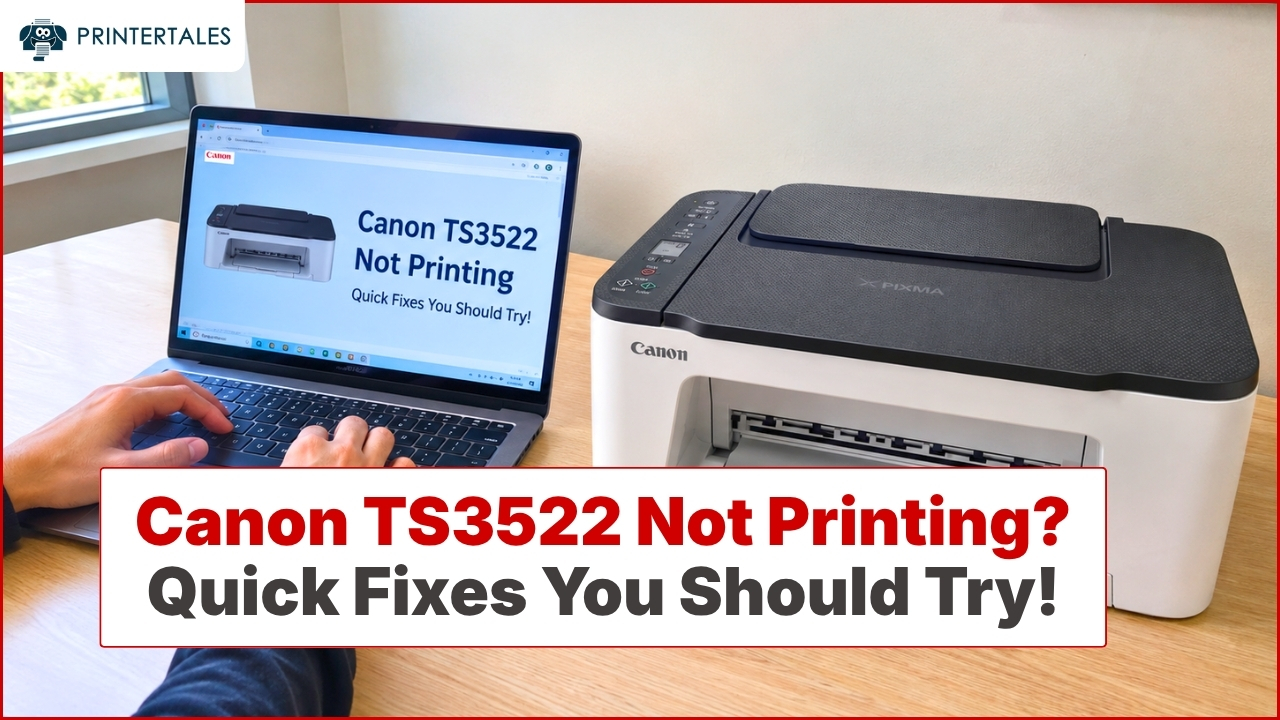
FINE cartridge models, such as printers that use PG-245 and CL-246, have the print head built into the cartridge. If cleaning doesn't bring the nozzles back, a new cartridge gives you a new print head as well.
Models with individual ink tanks, such as many TS6000 and TS8000 series printers, have a separate print head. A new tank won't fix a head that's still clogged after the steps above.
PIXMA G series (MegaTank)
Check the ink windows first. If any tank sits below the lower limit line, refill it before you run any cleaning. Canon warns that running system cleaning with too little ink can damage the printer.
Run the nozzle check, cleaning, and deep cleaning in the same order as above.
If a color still won't print, run system cleaning (called Ink Flush on some models). It pushes a lot of ink through the lines, so save it for last.
If you moved the printer recently, keep it level from now on. Canon cautions that tilting a MegaTank printer can make ink leak.
MAXIFY office inkjet
Use the same nozzle check and cleaning order as PIXMA. MAXIFY GX models are MegaTank printers, so the ink flush advice above applies to them too.
Watch for paper setting mismatches. If the paper size or type in your print settings doesn't match what's registered for the tray, the printer can stop and ask you to fix it. Change your print settings to match the loaded paper, or update the tray's paper information on the printer.
imageCLASS laser (MF and LBP series)
Sealing tape: On a new toner cartridge, pull the sealing tape straight out by its tab. It's longer than most people expect, close to 20 inches on some models. If it's left in or tears partway, toner can't flow and pages come out blank or faint.
Drum life: Some imageCLASS models use a separate drum cartridge. A worn drum gives faded or blank pages even when there's plenty of toner left. Check drum status on the printer's status screen.
Low toner: Depending on the model and its settings, the printer may stop when a cartridge runs low. Many color models let you choose to keep printing under Display Settings > Action When Warning.
Held or rejected jobs: Office printers are often set up with Department ID Management or Secure Print. A Secure Print job waits at the printer until someone enters its PIN, and a printer can be set to reject jobs that don't carry a valid Department ID. Check with whoever manages the printer.
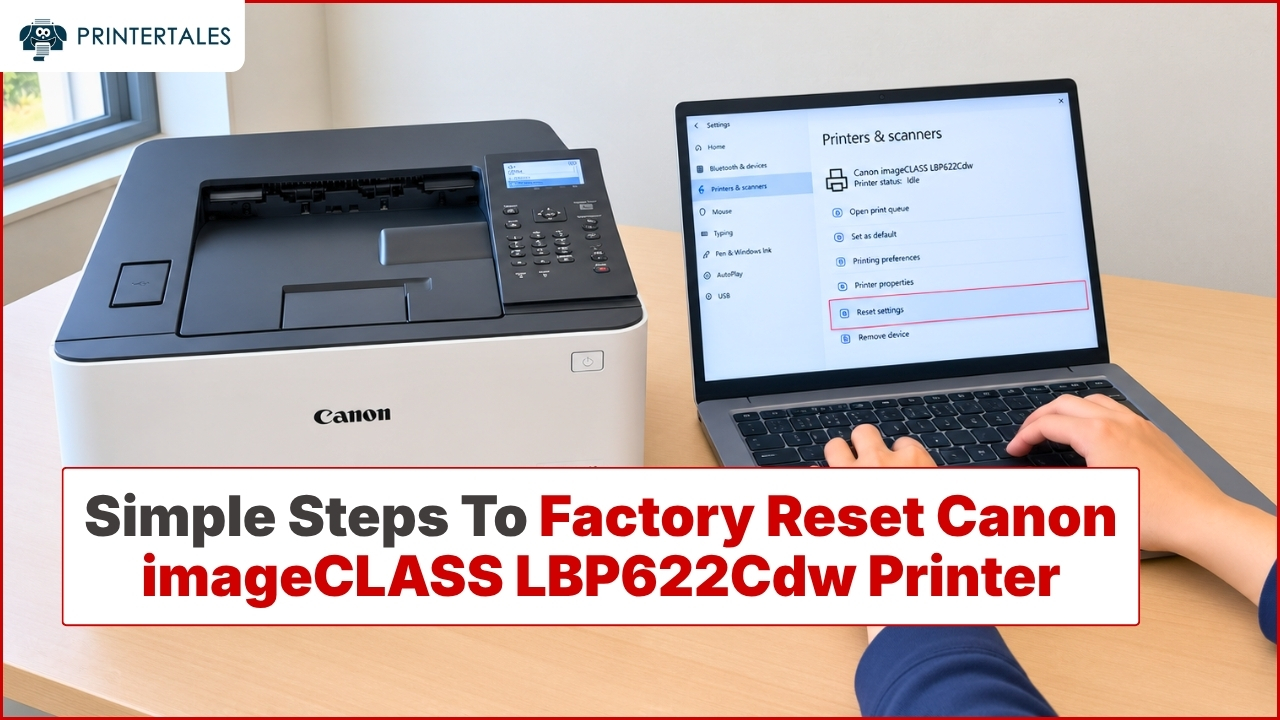
Driver: Use Canon's UFR II, PCL, or Generic Plus driver for your model instead of a basic generic one. If Windows attached the Microsoft IPP Class Driver, Canon's fix is to remove the printer, restart, and install the Generic Plus driver.
SELPHY photo printers (CP1300 and similar)
SELPHY printers use dye-sublimation, so they fail for different reasons than inkjets do.
The ink cassette and the paper have to be the same size. Use Canon's matched ink and paper sets, because regular photo paper won't work.
Before loading the ink cassette, check the ink sheet. If it's slack, turn the sprocket gently until it's taut.
Load the paper glossy side up, and no more than 18 sheets at a time on the CP1300.
The paper passes in and out of the back of the printer several times during each print, so leave clear space behind it and don't touch the paper until the print comes out.
Keep the paper cassette's outer cover open while printing.
For more on this model, see our Canon SELPHY CP1300 not printing guide.
Signs It's a Hardware Problem
You've probably hit a hardware fault if:
The nozzle check is still blank after two cleanings, a deep cleaning, a 24-hour rest, and a second deep cleaning (and, on FINE cartridge models, a fresh cartridge).
Support code 5B00 or B200 comes back after you unplug and restart. Canon's instructions for both are to contact a service center.
The printer warned that the ink absorber was almost full (code 1700) and now won't print at all. Replacing the absorber is a service job, not a home fix.
You hear grinding, the carriage won't move, or the printer won't power on.
Before you pay for a repair, compare the quote with the price of a new printer. On entry-level PIXMA models, a repair can cost close to what a replacement does. MAXIFY and imageCLASS printers cost more up front, so a repair is more often worth it. If your printer is still under warranty, contact Canon before you open it up or buy parts.
FAQs
Why is my Canon printer connected but not printing?
"Connected" usually means the network link is fine but the job isn't getting through. Clear the print queue, make sure the printer isn't paused or set to offline, set it as your default, and restart the Print Spooler on Windows. If your router restarted recently, the printer may have a new IP address, so re-add the printer or reserve its address in your router.
Why is my Canon printer printing blank pages?
On an inkjet, blank pages almost always mean ink isn't leaving the print head. The usual causes are clogged nozzles, an empty cartridge or tank, or tape left on a new cartridge, so print a nozzle check first. On an imageCLASS laser, make sure the toner sealing tape is fully removed and the drum isn't worn out.
Why won't my Canon print black when the cartridge is full?
The black nozzles are most likely clogged. Run a nozzle check, up to two cleanings, then one deep cleaning. If that doesn't work, rest the printer for 24 hours and deep clean again. Reseat the black cartridge as well, because an old cartridge can dry out even when the printer says it's full.
My Canon printer stopped printing after a Windows update. What now?
Updates can swap the driver, change the port, or create a duplicate printer. Remove the Canon from Printers & scanners, restart, and reinstall Canon's full driver package for your model. Then check that the port matches the printer's current IP address, and on Windows 11, make sure Windows hasn't switched you to the Microsoft IPP Class Driver.
How do I clear a stuck print job on a Canon printer?
Open the print queue and cancel everything. On Windows 11, go to Settings > Bluetooth & devices > Printers & scanners, select your Canon, click Open print queue, then choose ... > Cancel all. If a job won't delete, stop the Print Spooler, empty the %WINDIR%\system32\spool\printers folder, and start the spooler again.
Do I need Canon's driver on a Mac, or is AirPrint enough?
For everyday documents and photos, AirPrint is usually enough. Canon's driver adds more print settings and the Canon IJ Printer Utility2 maintenance tool. Not every model has a full Canon driver for current macOS, and if yours doesn't, AirPrint is the one to use.
How many times should I run print head cleaning?
Canon's order is up to two regular cleanings, then one deep cleaning. If that doesn't help, turn the printer off, wait 24 hours, and deep clean one more time. Running cleaning cycles back to back beyond that mostly burns through ink.
Can I keep printing when my Canon says the ink has run out?
Yes, but carefully. For support code 1688, holding the Stop button for at least 5 seconds turns off ink level detection for that cartridge. Canon warns this can damage the printer and says it isn't liable for any problems that result, so only do it when you know there's ink left, such as after a refill.
Printer Tales is an independent troubleshooting resource and is not affiliated with, authorized by, endorsed by, or sponsored by Canon. "Canon" and all related names, logos and model names are trademarks or registered trademarks of Canon or its affiliates, used here only to identify the products these guides cover. Full disclosure.
Cookie Consent
We use cookies to give you the best possible experience on our website. Cookie Policy